




toward a healthier tomorrow. We’re glad you’re here. Together,
we’ll work toward clarity, balance, and peace.

Psychotherapy in Hamilton

ADDICTION AND MENTAL HEALTH
Addiction and Mental Health effects both the individual and family.
Over 27 years of current and integrative experience will support you or your loved ones with the impact of addiction or mental health.

CONFLICT RESOLUTION
(COUPLES AND FAMILY)
Relationships can be difficult to manage and are stuck in unhealthy cycles. Enhancement of communication skills, exploring why and how you may push each other apart and supportive understanding of each other, can create healthier relationships and assist you to step out of these cycles. Healing Matters Psychotherapy is a poly friendly service.

PERSONAL DEVELOPMENT
Are you ready to make changes?
Often, individuals seek therapy because they have specific issues to address, or wish to experience personal growth, however may be unsure of what to focus on, or how. We are more successful in creating changes when we have support.

GRIEF AND LOSS
Grief has no rules, and no timelines, effecting emotions, behaviours, thoughts and our bodies. Grief can contribute to individuals feeling stuck and not knowing how manage intense emotional pain. Healing Matters Psychotherapy and Wellness will support you in your individualized experience of grief and loss.

TRAUMA AND PTSD
Trauma impacts individuals emotionally, mentally, physically and psychologically. This can overwhelm one’s ability to cope and have long lasting effects.
Healing Matters Psychotherapy uses evidence based techniques and therapeutic modalities to support individuals and and families in an a safe, trauma informed space.
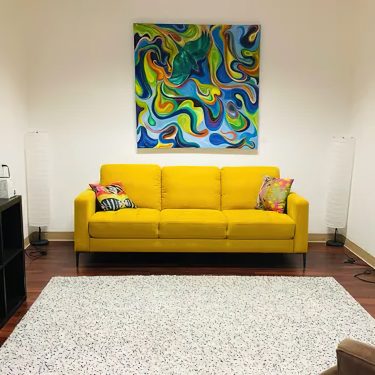
SAFE SPACE
Healing Matters Psychotherapy and Wellness is a safe and inclusive space.
Phobia Therapy Hamilton
Phobia Therapy Hamilton is a structured, evidence-based approach to treating specific phobias-intense, persistent fears that interfere with daily life. At Healing Matters Psychotherapy, we help individuals in the Hamilton area work through phobias using proven therapeutic methods grounded in decades of trauma-informed practice. This guide walks you through how the therapeutic process unfolds, so you understand what to expect when you seek support.
Whether you experience a phobia of heights, flying, animals, needles, enclosed spaces, or social situations, the steps outlined here reflect the methodical way therapists in Hamilton approach fear reduction. The outcome is genuine: with proper guidance and your commitment, phobias become manageable, and the anxiety that once controlled you loses its grip.
Step 1: Build a Detailed Fear Profile and Assess Your Phobia
The first session involves creating a comprehensive picture of your phobia. Your therapist at Healing Matters Psychotherapy will ask specific questions: What triggers the fear? When did it start? How does your body react-rapid heartbeat, sweating, freezing? What situations do you avoid because of it? This information is not casual conversation; it is diagnostic material that shapes your entire treatment plan.
You will likely complete a phobia severity scale, a standardized tool that measures the intensity and impact of your fear on a numerical range. This baseline lets you and your therapist track progress objectively over time. Understanding the precise mechanisms of your phobia-the thoughts, physical sensations, and avoidance patterns-is essential because it reveals exactly where therapeutic intervention will be most effective. Many people in Hamilton come to therapy surprised to learn that their phobia has a learnable structure; once mapped, it becomes addressable.
Step 2: Learn and Practice Cognitive and Physiological Coping Techniques
Before facing the fear directly, you will develop tools to regulate your nervous system. Your therapist will teach you grounding techniques, breathing exercises, and cognitive reframing-the skill of identifying and gently challenging the catastrophic thoughts that fuel phobic anxiety. For example, if your phobia is flying, the thought "the plane will crash" becomes the target; you learn to recognize it as a thought, not a fact, and to replace it with realistic perspective.
Specific methods include:
- Diaphragmatic breathing: slow, belly-centered breathing that activates your parasympathetic nervous system and reduces the fight-or-flight response
- Progressive muscle relaxation: systematically tensing and releasing muscle groups to release physical tension
- Cognitive restructuring: identifying fearful thoughts and examining evidence for and against them
- Mindfulness: observing anxious sensations without judgment, which reduces their power over time
These are not just relaxation exercises; they are precise neurophysiological interventions. Because your brain has learned to associate certain triggers with danger, these techniques teach it a new response. You practice them in session and at home until they become automatic-something you can draw on when anxiety rises.
Step 3: Engage in Gradual Exposure and Habituation
Exposure therapy is the gold standard for phobia treatment. Your Healing Matters Psychotherapy therapist will work with you to create an exposure hierarchy-a ranked list of situations related to your fear, arranged from least to most anxiety-provoking. If you fear dogs, for example, the hierarchy might begin with looking at a photo of a small dog at a distance, then progress to seeing a dog outside a window, then watching a video, then visiting a dog in a controlled setting, and finally interacting with a calm dog in person.
Habituation is the process your brain undergoes during repeated, prolonged exposure. When you stay present with the feared object or situation long enough-typically 20 to 45 minutes-your anxiety naturally decreases. This happens because your nervous system learns that the danger you expected does not materialize. Over multiple exposures, the threat association weakens. The key is that you remain in the situation until your anxiety drops by at least 50 percent; leaving too early reinforces the fear. Your therapist guides this process carefully, ensuring you feel supported while building genuine confidence in your ability to tolerate discomfort.
Exposure can be conducted in imagination (imaginal exposure) for fears like flying or natural disasters, or in real-world settings (in vivo exposure). Research shows that in vivo exposure is typically more effective, though both have proven value. Many clients in the Hamilton area appreciate that their therapist customizes the pace and intensity to match their readiness and comfort level.
Throughout treatment, your therapist monitors your progress using the same severity scale from your initial assessment. Measurable improvement-a drop in your phobia score, increased ability to approach feared situations, reduced avoidance-confirms that the work is working. The process takes patience, but the results are durable: phobias treated with exposure therapy show lasting recovery rates well above 75 percent.
If you are ready to address a phobia that has limited your life, Healing Matters Psychotherapy in Hamilton is here to guide you. Reach out to speak with a therapist about how this approach can work for you.
Frequently Asked Questions
How long does phobia therapy typically take in Hamilton?
Most specific phobias respond well to focused therapy within 8 to 16 sessions, though individual timelines vary based on phobia severity, your willingness to engage in exposure, and other factors in your life. Some clients see meaningful improvement within 4 to 6 weeks of consistent work.
Is exposure therapy safe, or will it make my anxiety worse?
Exposure therapy is both safe and evidence-based when conducted by a trained therapist who builds your hierarchy gradually and provides support throughout. While anxiety does rise initially during exposure, it naturally decreases over time-a process called habituation. Your therapist ensures you are never pushed beyond your capacity to cope.
Can phobia therapy help with multiple fears, or just one at a time?
Therapists can address multiple phobias, though most prioritize one at a time to build confidence and allow your brain to consolidate learning. Once you succeed with your first phobia, you often develop the skills and belief in your ability to tackle others.
What if I have trauma connected to my phobia-can a therapist in Hamilton address that?
Yes. Healing Matters Psychotherapy specializes in trauma-informed care, which means your therapist understands the link between past trauma and phobic responses. They can integrate trauma processing with phobia treatment to address root causes, not just surface symptoms.
Is phobia therapy available near me in Hamilton, Ontario?
Yes. Healing Matters Psychotherapy offers phobia therapy in Hamilton and serves the greater Hamilton area. You can reach out to discuss whether in-person or other session formats suit your needs.
CONTACT US
QUESTIONS?
Please do not hesitate to contact us with any questions you may have, or to book your free consultation.
HEALING MATTERS PSYCHOTHERAPY AND WELLNESS
Main Office
430 York Blvd., Hamilton ON (Free Parking) At the Hamilton Centre for Personal Development
Second Location
664 Golf Club Rd, Hamilton, ON L0R 1P0
(905) 921-6340
HOURS
Tuesday to Friday 10:00 am – 8:00 pm
Saturday 10 AM to 3 PM
By appointment only