




toward a healthier tomorrow. We’re glad you’re here. Together,
we’ll work toward clarity, balance, and peace.

Psychotherapy in Hamilton

ADDICTION AND MENTAL HEALTH
Addiction and Mental Health effects both the individual and family.
Over 27 years of current and integrative experience will support you or your loved ones with the impact of addiction or mental health.

CONFLICT RESOLUTION
(COUPLES AND FAMILY)
Relationships can be difficult to manage and are stuck in unhealthy cycles. Enhancement of communication skills, exploring why and how you may push each other apart and supportive understanding of each other, can create healthier relationships and assist you to step out of these cycles. Healing Matters Psychotherapy is a poly friendly service.

PERSONAL DEVELOPMENT
Are you ready to make changes?
Often, individuals seek therapy because they have specific issues to address, or wish to experience personal growth, however may be unsure of what to focus on, or how. We are more successful in creating changes when we have support.

GRIEF AND LOSS
Grief has no rules, and no timelines, effecting emotions, behaviours, thoughts and our bodies. Grief can contribute to individuals feeling stuck and not knowing how manage intense emotional pain. Healing Matters Psychotherapy and Wellness will support you in your individualized experience of grief and loss.

TRAUMA AND PTSD
Trauma impacts individuals emotionally, mentally, physically and psychologically. This can overwhelm one’s ability to cope and have long lasting effects.
Healing Matters Psychotherapy uses evidence based techniques and therapeutic modalities to support individuals and and families in an a safe, trauma informed space.
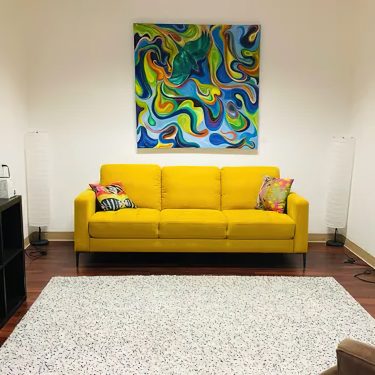
SAFE SPACE
Healing Matters Psychotherapy and Wellness is a safe and inclusive space.
Ocd Therapy Hamilton
OCD therapy in Hamilton is a specialized form of mental health treatment that addresses obsessive-compulsive disorder through evidence-based psychological interventions tailored to each person's specific patterns and triggers. At Healing Matters Psychotherapy, we understand that OCD presents differently for everyone, and effective treatment requires both clinical expertise and genuine compassion.
What Makes OCD Therapy Different From General Anxiety Treatment
Obsessive-compulsive disorder is not simply anxiety that needs calming-it is a condition where the brain gets stuck in a loop of intrusive thoughts followed by compulsive behaviors designed to reduce distress. This is why generic anxiety management techniques often fall short. OCD therapy in Hamilton requires specialized training in exposure and response prevention (ERP), a gold-standard approach that helps you gradually face feared thoughts without performing the compulsive behaviors that maintain the cycle.
Many people in the Greater Hamilton Area struggle with OCD for years before seeking help, partly because the condition is widely misunderstood. You might experience unwanted thoughts about harm, contamination, symmetry, or taboo subjects-and the shame often prevents people from reaching out. At Healing Matters Psychotherapy, we meet you with understanding rather than judgment. We know these thoughts do not reflect who you are or what you want; they are symptoms of a treatable condition.
Because OCD often co-occurs with anxiety, depression, or trauma, we take a trauma-informed approach that looks at your whole picture. This matters especially if your OCD developed after a difficult life event or alongside other mental health challenges.
Comparing OCD Therapy Approaches Available in Hamilton
Several evidence-based methods exist for treating obsessive-compulsive disorder, and the best choice depends on the nature of your symptoms, your personal preferences, and how you respond to different interventions. Here is how the main approaches compare:
| Approach | How It Works | Best For | Timeline |
|---|---|---|---|
| Exposure and Response Prevention (ERP) | Gradual, repeated exposure to feared thoughts or situations while resisting the urge to perform compulsions. The anxiety naturally decreases over time without the "safety behavior." | Most OCD presentations; highly effective for contamination, harm, and checking obsessions | 12-20 weeks typical; longer for complex cases |
| Cognitive Behavioral Therapy (CBT) | Identifies thinking patterns that fuel OCD and teaches skills to challenge unhelpful beliefs and manage distress differently | OCD with significant cognitive distortions; often combined with ERP | 16-24 weeks typical |
| Acceptance and Commitment Therapy (ACT) | Teaches you to accept intrusive thoughts without struggling against them, while clarifying your values and taking meaningful action aligned with them | OCD resistant to ERP alone; perfectionism-driven obsessions; values-based living goals | Ongoing; benefits emerge over 8-12 weeks |
| Integrative Therapy (ERP + CBT + ACT) | Combines multiple evidence-based methods tailored to your specific symptoms, history, and goals | Complex OCD; co-occurring depression, trauma, or relationship issues; personalized treatment | Flexible; typically 16-32 weeks |
At Healing Matters Psychotherapy, we specialize in integrative approaches because OCD rarely exists in isolation. If you are also processing trauma or managing relationship strain around your compulsive behaviors, an integrated treatment plan addresses the whole picture rather than symptoms alone.
Why Trauma-Informed Care Matters in Hamilton Therapy for OCD
Many people do not realize that OCD can develop after or alongside traumatic experiences. You might have experienced a loss, accident, assault, or other overwhelming event, and your brain responded by creating obsessions and compulsions as a way to regain control. Standard OCD treatment without trauma awareness can sometimes feel retraumatizing if the therapist does not understand how your nervous system has learned to protect itself.
Healing Matters Psychotherapy brings over 27 years of integrative experience to this work. We understand how trauma and OCD interact. We move at your pace, build safety first, and never push you into exposure work when your nervous system is still in survival mode. This slower, more compassionate entry into treatment often leads to better outcomes because you feel genuinely supported rather than forced.
If your OCD involves harm obsessions related to past violence or abuse, if you experience flashbacks alongside intrusive thoughts, or if you feel unsafe in your own body, trauma-informed therapy is essential. We have the training and presence to work with these layers.
When to Seek Professional OCD Therapy in Hamilton
OCD often sneaks up gradually. You might notice intrusive thoughts becoming more frequent, spending hours on compulsions, or avoiding places and people because of your obsessions. By the time you search for help, OCD may already be affecting your work, relationships, and quality of life.
You do not need to reach a crisis point to seek therapy. Many people find that addressing OCD early-before it has reorganized your entire life around avoidance-leads to faster, more complete recovery. If you notice any of these signs, reach out:
- Intrusive thoughts that feel distressing and unwanted, despite your efforts to dismiss them
- Repetitive behaviors (checking, cleaning, arranging, counting) that take up significant time
- Avoidance of people, places, or situations because they trigger obsessions
- Shame or secrecy about your thoughts or rituals
- Impact on relationships, work performance, or daily functioning
Some people in Hamilton manage low-level OCD symptoms for decades before seeking help, thinking "it's just how I am." But OCD is responsive to proper treatment. Whether your symptoms are mild or severe, you deserve support from someone trained to help.
Building a Sustainable Recovery Plan With Your Therapist
Treatment for OCD is not about eliminating intrusive thoughts-because that is not actually possible, and trying to suppress thoughts often makes them stronger. Recovery means changing your relationship with the thoughts. When you stop treating them as dangerous or meaningful, and stop performing compulsions to neutralize them, the thoughts lose their power over time.
At Healing Matters Psychotherapy, we collaborate with you to build a recovery plan that fits your life. This might involve trauma processing first if needed, then gradual exposure work, skill-building in distress tolerance, and learning to live according to your values rather than OCD's demands. We track progress clearly so you can see that the work is paying off.
Because we also offer individual counselling, couples counselling, and trauma therapy, we can address the ripple effects of OCD on your relationships. If your compulsions have created conflict with your partner, or if you are isolated because of shame, we help you rebuild connection as your symptoms decrease. Recovery is not just about symptom reduction-it is about reclaiming your life.
If you are struggling with obsessive thoughts and compulsive behaviors, you do not have to manage this alone. Healing Matters Psychotherapy is here to provide evidence-based, compassionate treatment in a safe and non-judgmental space. We invite you to reach out to learn more about how therapy can help you move forward. Your first step is simply getting in touch.
Frequently Asked Questions
What is the difference between OCD and generalized anxiety?
OCD involves specific obsessions (intrusive, unwanted thoughts) paired with compulsions (repetitive behaviors to reduce distress), while generalized anxiety involves worry about multiple topics without the need to perform rituals. OCD treatment targets the obsession-compulsion cycle directly, whereas anxiety therapy focuses on worry management and tolerance of uncertainty.
How long does OCD therapy typically take?
Most people see meaningful improvement within 12 to 20 weeks of consistent therapy, though complex cases or those involving trauma may take longer. The timeline depends on symptom severity, how long OCD has been present, and your engagement with homework between sessions. Progress is usually visible within the first month.
Is medication necessary alongside therapy for OCD?
Medication can be helpful for some people and is a decision to make with your prescribing doctor. Therapy alone-particularly exposure and response prevention-is effective for many. At Healing Matters Psychotherapy, we work collaboratively with your medical team to support whatever approach serves you best.
Can OCD therapy in Hamilton address my specific obsessions?
Yes. Whether your obsessions involve contamination, harm, symmetry, taboo thoughts, or other content, evidence-based therapy is effective. Our therapists have extensive experience treating the full range of OCD presentations and adapt treatment to your specific triggers and compulsions.
What if I have OCD and trauma-can both be treated together?
Absolutely. In fact, addressing them together often leads to better outcomes than treating them separately. At Healing Matters Psychotherapy, we use trauma-informed approaches that help your nervous system feel safe first, then work into OCD-specific techniques. We may pace treatment to process trauma and OCD in a way that feels manageable.
Are there OCD therapists available in Hamilton right now?
Yes. Healing Matters Psychotherapy offers specialized OCD therapy in Hamilton with experienced clinicians trained in evidence-based approaches. We accept new clients and work with flexible scheduling. Contact us to discuss availability and find a time that works for you.
CONTACT US
QUESTIONS?
Please do not hesitate to contact us with any questions you may have, or to book your free consultation.
HEALING MATTERS PSYCHOTHERAPY AND WELLNESS
Main Office
430 York Blvd., Hamilton ON (Free Parking) At the Hamilton Centre for Personal Development
Second Location
664 Golf Club Rd, Hamilton, ON L0R 1P0
(905) 921-6340
HOURS
Tuesday to Friday 10:00 am – 8:00 pm
Saturday 10 AM to 3 PM
By appointment only